
The Afterlife of Solar and Storage
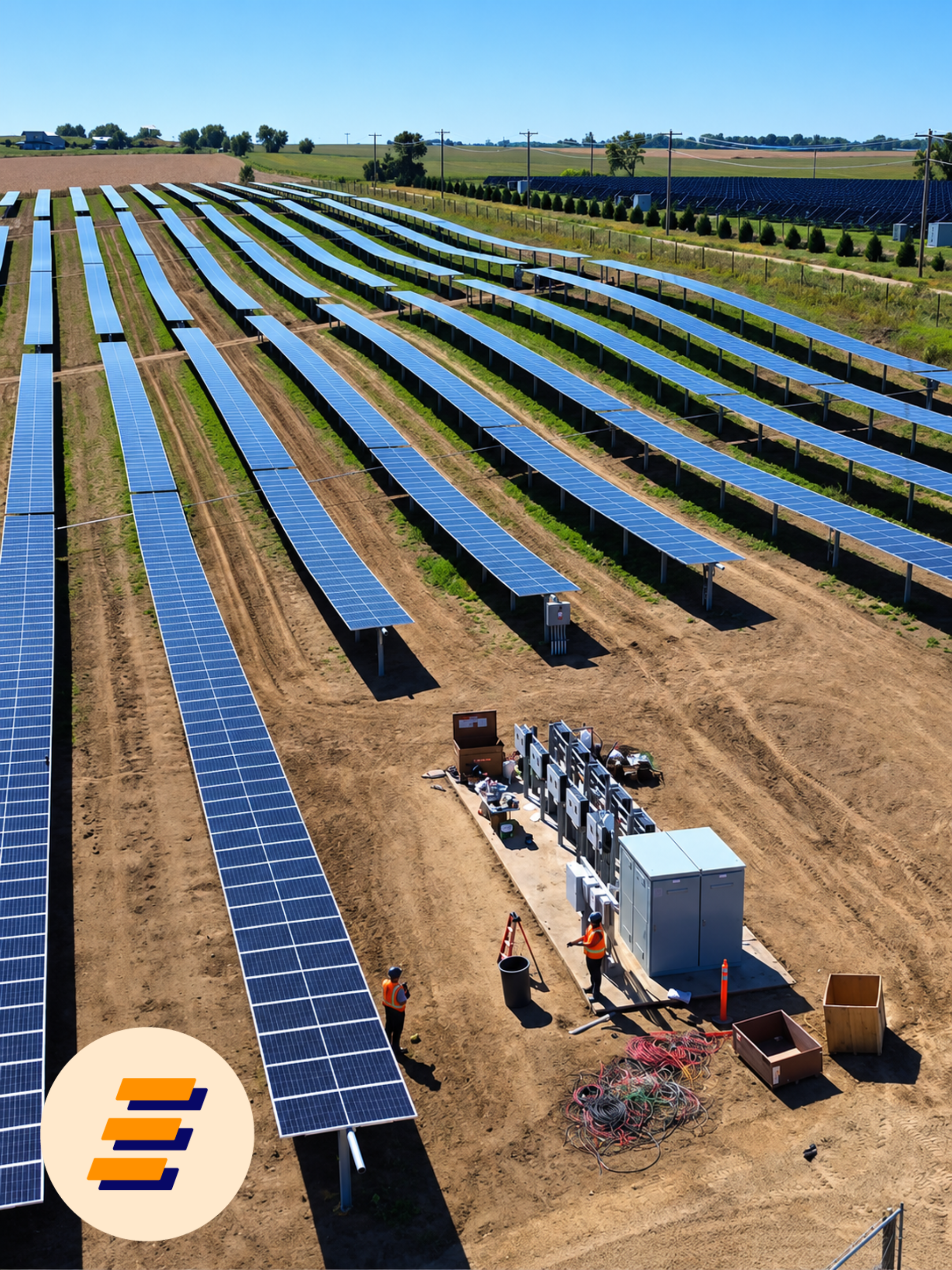
Solar and battery energy storage projects are long-term energy investments without requiring permanent transformation of the land beneath them. Properly designed projects can operate for decades while preserving the underlying property for future use, and when their operating or lease terms end, the equipment can be removed and the site restored.
Unlike many forms of permanent industrial development, solar and BESS projects are largely modular and reversible. Panels, racking, battery containers, electrical equipment and supporting infrastructure can all be taken out at the end of a project's useful life. The land remains valuable, usable and capable of serving another purpose long after the energy project is gone.
That distinction is especially important as communities consider new infrastructure. A solar or battery project may occupy a site for decades, but it does not have to permanently redefine that site.
Decades of Service Without Permanent Development
The U.S. Department of Energy reports that the average operational lifespan of solar panels has increased to approximately 25–35 years, with many systems capable of continuing to operate beyond their original performance expectations.
Battery energy storage systems operate on a somewhat different lifecycle. Individual battery cells and modules may have a technical life of roughly 15 years, while a battery storage project itself can remain in service for 20–25 years or longer through augmentation, replacement and equipment upgrades.
This means both solar and battery projects can provide decades of useful energy infrastructure while still being designed with an eventual end point in mind.
The End of the Lease
At the end of a project's operating life or lease term, decommissioning begins.
For a solar project, that typically means removing panels, racking systems, inverters, transformers, wiring, fencing and other project infrastructure. Battery storage projects can similarly be dismantled by removing battery containers or enclosures, power conversion equipment, transformers, electrical infrastructure and associated foundations.
Once the equipment is removed, disturbed areas can be graded and restored, vegetation can be reestablished and the property can transition back to agricultural use, open space or another future use determined by the landowner.
Much of the material removed from a solar or battery project can also enter reuse or recycling streams rather than simply becoming waste. Metals such as steel, aluminum and copper have established recycling markets, while the solar and battery industries continue to expand recycling systems for panels, battery cells and other specialized components.
Soil Under a Solar Project
One of the less visible benefits of this type of development is what does not happen to the land.
Large portions of a solar site remain vegetated and permeable rather than being covered by buildings, asphalt or large areas of concrete. Native or low-growing vegetation can be maintained around and beneath solar arrays, allowing rainfall to continue reaching the soil and vegetation to remain established throughout the life of the project.
Although access roads, equipment pads and foundations create localized disturbance, much of the underlying land can remain intact for decades.
That makes restoration at the end of the project fundamentally different from redeveloping a site that has been heavily paved, excavated or occupied by permanent structures.
A Different Kind of Development
This reversibility separates solar and battery storage from many other types of development.
A data center, warehouse, manufacturing facility or other large permanent building may require extensive foundations, utilities, roads, parking lots and large areas of impervious surface. Once constructed, returning that property to its previous condition can require substantial demolition and redevelopment.
Solar and battery projects generally rely on modular equipment that can be installed, replaced and ultimately removed.
They still require thoughtful siting, construction and restoration planning, but the physical footprint does not necessarily need to become a permanent feature of the property.
Planning for the End From the Beginning
Responsible project development includes thinking about decommissioning long before a project reaches the end of its operating life.
That can include identifying how equipment will be removed, establishing financial responsibility for decommissioning, planning for recycling or disposal, and defining how disturbed portions of the site will be restored.
Planning for the full lifecycle of a project helps protect landowners and communities while ensuring that the benefits of the project do not come at the expense of the property's long-term usefulness.
For Enterprise Energy, solar and battery storage development is not only about what a project can provide during its years of operation. It is also about what happens afterward.
A well-designed project can serve the grid for decades, be responsibly removed when its work is finished and leave the land ready for whatever comes next.
