
New York Sets the Pace for Safe and Scalable Energy Storage Growth
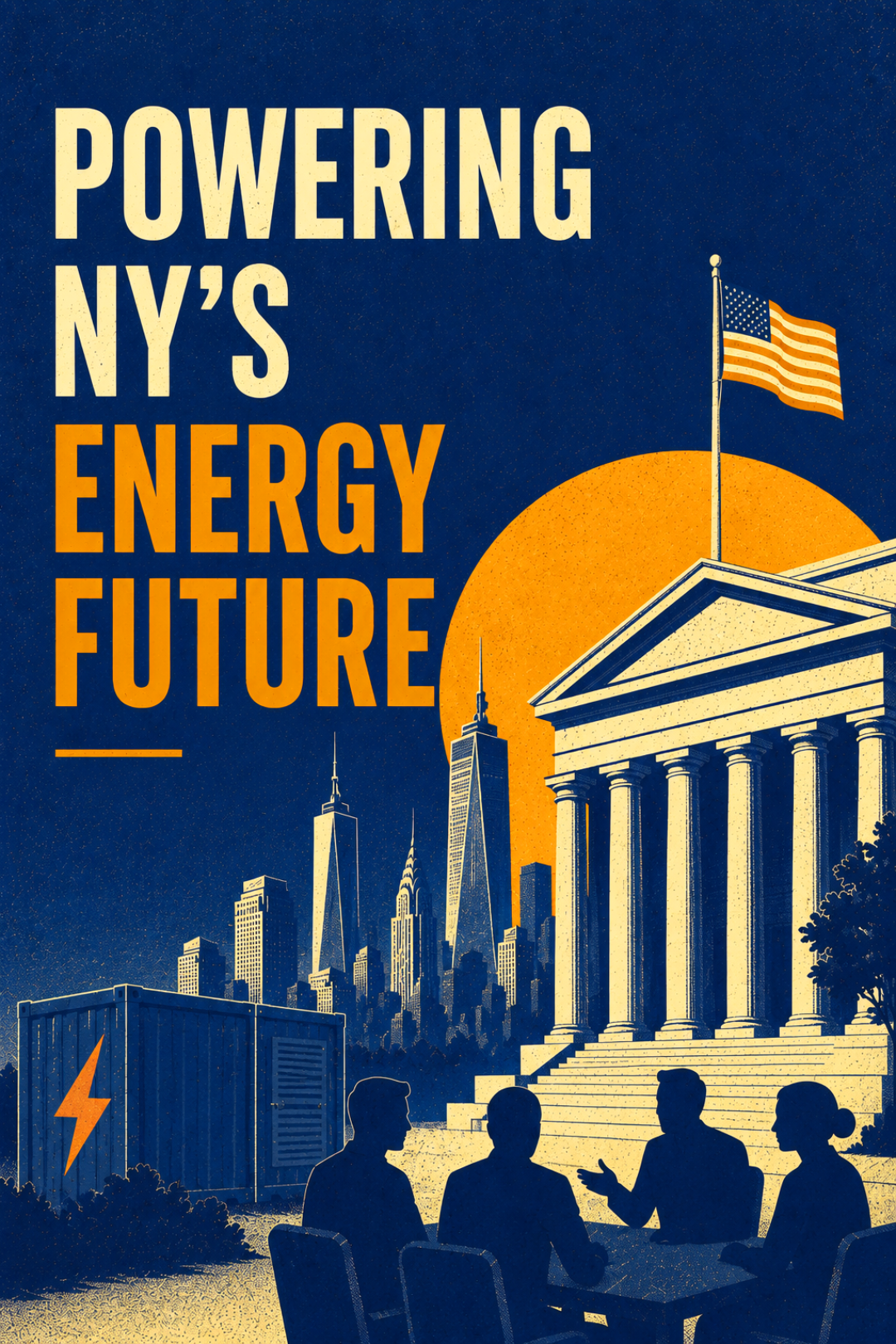
As states across the country work to modernize their electric grids, New York is emerging as a national leader in balancing clean energy deployment with public safety.
Over the past year, New York State has taken significant steps to strengthen battery energy storage safety standards while simultaneously expanding support for distributed solar and energy storage development. Together, these efforts demonstrate how thoughtful policy can accelerate the clean energy transition while maintaining public confidence in emerging technologies.
Strengthening Battery Storage Safety
Battery energy storage systems (BESS) are becoming an increasingly important component of the modern electric grid. By storing electricity generated from renewable sources such as solar and wind, energy storage systems help improve grid reliability, enhance resiliency, and support growing electricity demand.
Recognizing the importance of safe deployment, New York implemented updated fire code requirements for battery storage facilities in 2026 following recommendations developed by the state's Inter-Agency Fire Safety Working Group. The updated standards include enhanced emergency response planning, expanded hazard mitigation analyses, increased coordination with local fire departments, and more rigorous engineering review requirements.
These updates provide local jurisdictions, developers, and first responders with a clearer framework for evaluating and operating battery storage facilities while incorporating lessons learned from the industry's continued growth.
Investing in the Future of Distributed Energy
At the same time, New York's recently finalized FY2027 budget demonstrates the state's continued commitment to distributed energy resources.
The budget includes $200 million in additional funding for the NY-Sun program, one of the nation's most successful distributed solar initiatives, which has helped drive the growth of rooftop and community solar projects throughout the state. Industry groups estimate the funding could support approximately one gigawatt of additional distributed solar capacity while leveraging significant private investment and creating thousands of jobs.
In addition to new funding, the budget directs regulators to pursue reforms aimed at improving the utility interconnection process, an area widely recognized as one of the most significant barriers to deploying new solar and energy storage projects. These reforms are intended to reduce costs, shorten timelines, and improve access to the electric grid for distributed energy resources.
A Growing Focus on Affordability and Reliability
Industry leaders have highlighted the connection between distributed energy deployment and long-term energy affordability.
In response to the finalized budget, Kate Daniel, Northeast Regional Director for the Coalition for Community Solar Access (CCSA), noted that the state's investment in distributed solar will help maintain momentum in New York's community solar market while addressing interconnection challenges that contribute to project costs. Industry organizations including CCSA, NYSEIA, and SEIA have emphasized that modernizing interconnection processes will be critical to expanding access to affordable clean energy in the years ahead.
As electricity demand continues to increase, particularly from electrification and data center growth, distributed solar and energy storage are expected to play an increasingly important role in supporting grid reliability while helping control energy costs.
Building a Model for Other States
New York's approach reflects an important reality facing the energy industry today: growth and safety must advance together.
By strengthening battery storage safety requirements while investing in solar deployment and interconnection modernization, New York is creating a framework that other states may look to as they pursue their own clean energy goals.
For developers, policymakers, utilities, and communities, these actions provide a roadmap for how distributed energy resources can be deployed responsibly, efficiently, and safely while continuing to deliver economic and environmental benefits.
As the energy transition accelerates nationwide, policies that improve safety, streamline development, and expand access to clean energy will remain essential to building a more resilient and affordable energy future.
