
The New Energy Bottleneck: Interconnection, Storage, and Grid Reliability
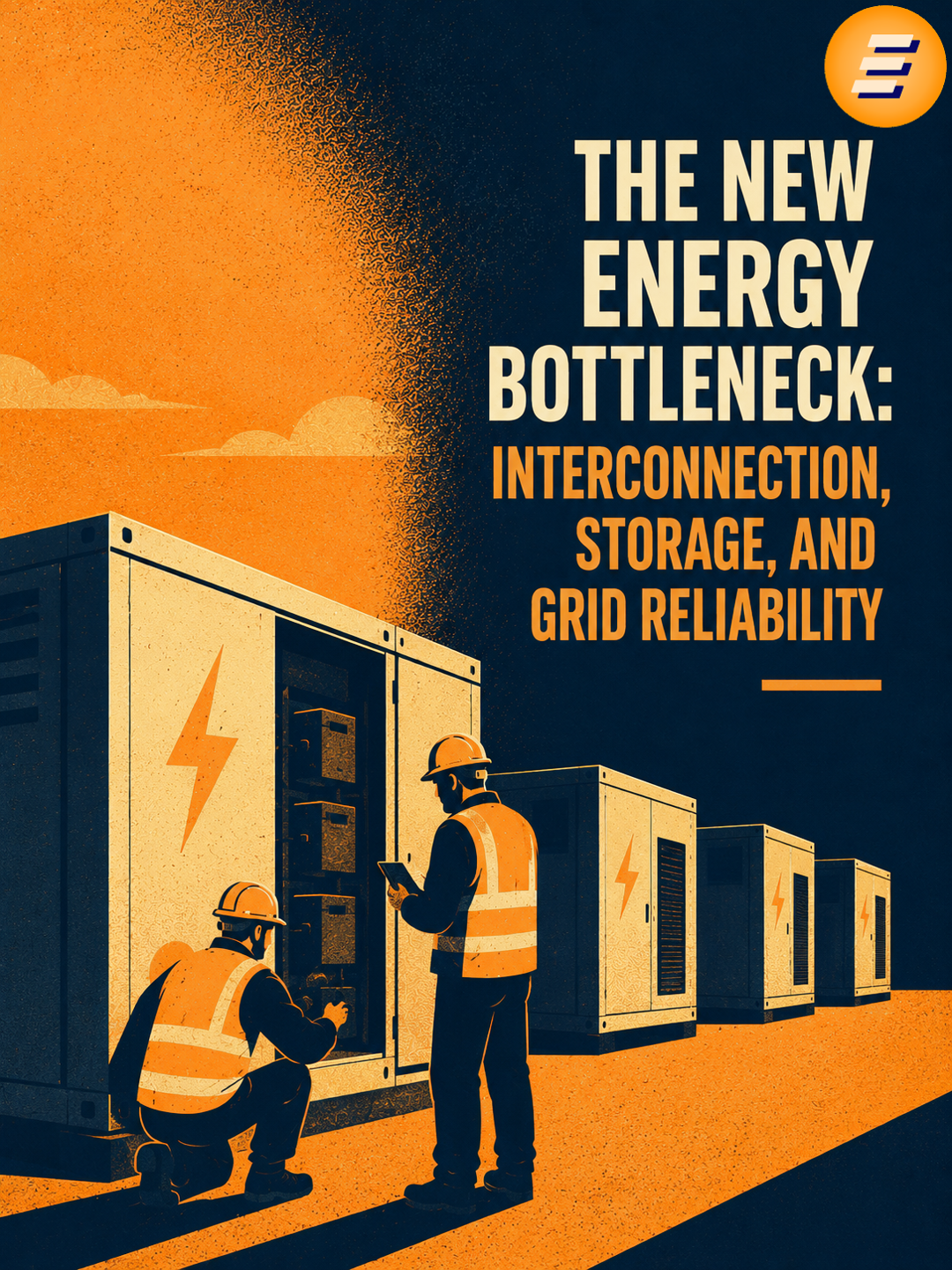
For years, the renewable energy industry primarily focused on delivering the lowest-cost electricity possible. Today, the industry is evolving as utilities, grid operators, and policymakers place greater emphasis on reliability, resiliency, flexibility, and speed-to-power. Rising electricity demand driven by AI infrastructure, manufacturing expansion, electrification, and population growth is accelerating this shift.
Interconnection Constraints Are Reshaping Development
One of the most significant challenges facing the industry is interconnection. Across the United States, thousands of renewable energy and battery storage projects remain stalled in interconnection queues awaiting system studies and approvals. In some regions, projects are experiencing delays of three to seven years before they can energize. The transmission system was not originally designed to support the current pace of renewable deployment, data center growth, electric vehicle adoption, and increasing electricity demand simultaneously.
As a result, utilities and regional grid operators are increasingly prioritizing energy resources that provide operational flexibility and support overall grid stability. Battery Energy Storage Systems (BESS) have become particularly valuable as they can shift energy into peak demand periods, reduce local congestion, and improve reliability. In many cases, storage systems can also help defer or avoid costly transmission and distribution upgrades. This has significantly changed how utilities evaluate renewable energy projects.
Hybrid solar-plus-storage systems are becoming increasingly attractive because they can operate more dynamically and place less strain on constrained infrastructure compared to standalone solar projects. Battery storage is no longer viewed solely as an additional revenue source; it is increasingly recognized as critical grid infrastructure necessary to support long-term reliability and system flexibility.
Flexible Interconnection and Grid Modernization
The industry is also seeing a transition toward more flexible interconnection structures. Traditional models that relied on unrestricted export rights are becoming more difficult and expensive to maintain. Utilities and grid operators are now exploring alternatives such as export-limited systems, non-firm interconnection agreements, and dynamic operating limits. These approaches can allow projects to interconnect faster and at lower cost while improving grid management capabilities.
The rapid growth of AI infrastructure and hyperscale data centers is further accelerating these market changes. Modern data centers require substantial amounts of electricity, extremely high reliability, and fast energization timelines. Utilities in many regions are now forecasting levels of demand growth that were previously considered unlikely. Unlike traditional commercial loads, data centers operate continuously and often require hundreds of megawatts of power at a single location, placing significant pressure on transmission systems, substations, and local distribution infrastructure.
In response, utilities and grid operators are increasingly prioritizing dispatchability, resiliency, and local grid support rather than focusing exclusively on the lowest-cost generation source. This trend strongly favors BESS, hybrid solar-plus-storage projects, and distributed generation located near load centers. These resources can reduce congestion, improve reliability, and provide power more efficiently in rapidly growing regions.
Why This Matters for the Midwest
Project location is also becoming increasingly important. Historically, renewable development emphasized low-cost land and transmission access. Today, transmission congestion is increasing the value of projects located closer to where electricity is consumed. Projects near urban centers, industrial corridors, and data centers can provide substantial grid benefits by reducing local congestion and improving reliability. This is one reason distributed energy resources, including community solar and distributed storage, continue gaining momentum nationwide.
Illinois and Minnesota are both well-positioned to benefit from these market trends due to strong community solar programs, increasing storage interest, and supportive clean energy policies. However, both states continue to face transmission congestion, interconnection bottlenecks, and infrastructure constraints. These conditions create opportunities for developers capable of integrating storage effectively, optimizing interconnection strategies, and developing projects closer to load centers.
As the energy transition continues, community solar and storage projects are becoming increasingly valuable because they provide more distributed, flexible, and grid-supportive infrastructure. The future of clean energy is no longer defined solely by electricity generation, but by the ability to deliver reliable, resilient, and flexible energy systems capable of supporting the next generation of electricity demand.
