
U.S. Energy Storage Sets a New First-Quarter Record
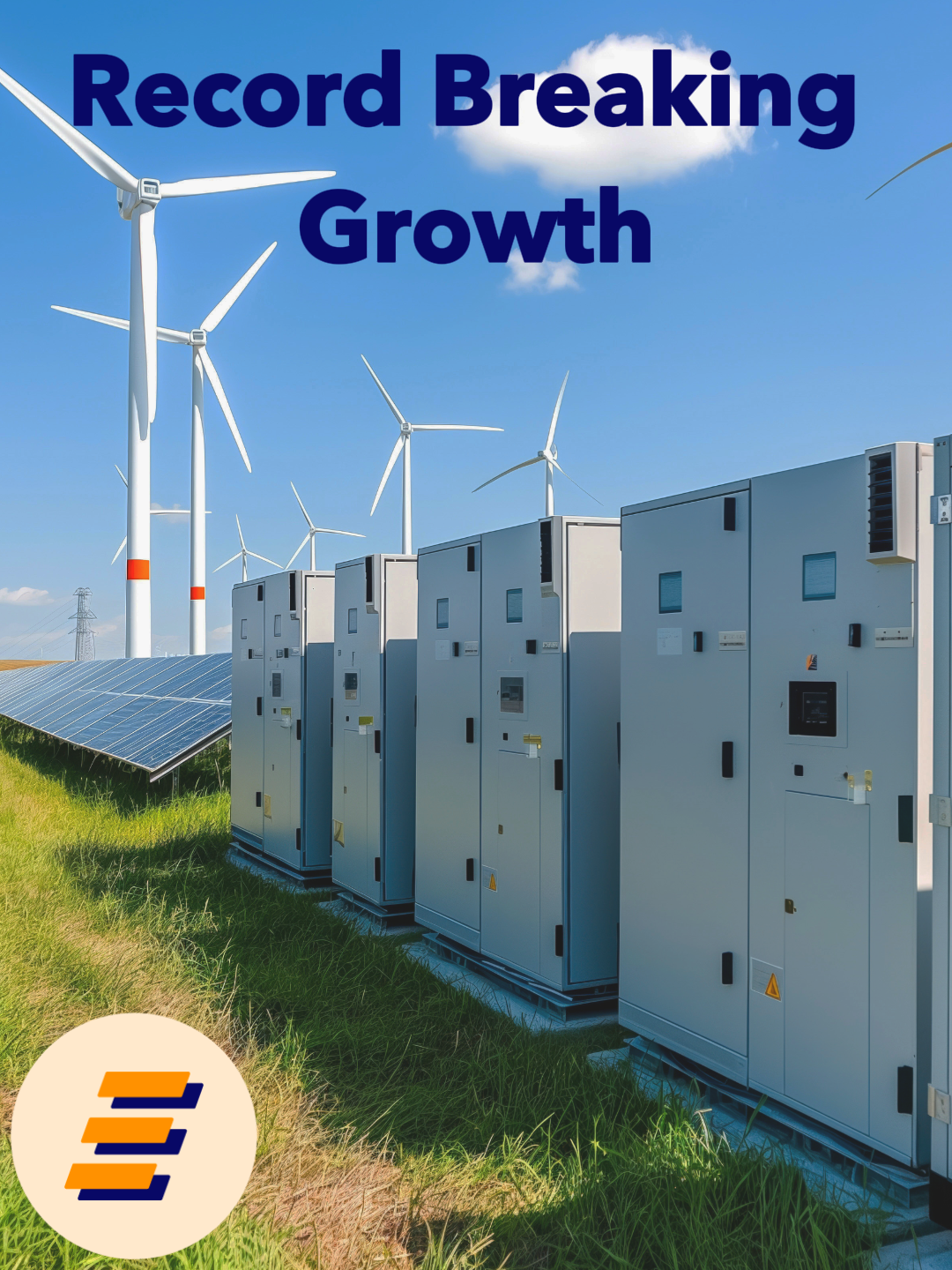
The United States added 9.7 gigawatt-hours (GWh) of energy storage capacity during the first quarter of 2026, marking the strongest first quarter in the industry's history.
According to the latest U.S. Energy Storage Market Outlook from the Solar Energy Industries Association (SEIA) and Benchmark Mineral Intelligence, first-quarter installations increased 32% compared with the same period last year. The milestone reflects more than rapid market growth, it signals that battery energy storage systems (BESS) are becoming an increasingly important part of how the United States modernizes and strengthens its electric grid.
Battery Storage Is Becoming Essential Grid Infrastructure
Battery energy storage systems store electricity when supply is abundant and discharge it during periods of higher demand or when additional grid support is needed. This flexibility allows grid operators to better balance electricity supply and demand while making more efficient use of energy already produced across the system.
As electricity demand continues to rise, battery storage helps utilities respond to peak consumption without relying solely on new generation resources. Storage can also improve grid stability, reduce strain on existing infrastructure, and support reliable electric service during periods of increased demand.
The record-setting first quarter demonstrates that battery storage is no longer viewed simply as a supplemental resource. Instead, it is becoming a foundational component of a more reliable, resilient, and flexible electric grid.
Utility-Scale Projects Continue to Drive Growth
Utility-scale battery projects accounted for the overwhelming majority of new deployments during the quarter. Of the 9.7 GWh installed nationwide, 7.8 GWh came from utility-scale systems, roughly 80% of all new storage capacity. Commercial and industrial projects added another 648 megawatt-hours (MWh), while residential installations contributed 515 MWh.
Texas, Arizona, and California remained the nation's leading utility-scale storage markets, but growth is expanding well beyond those established leaders. States including Georgia, Iowa, and Mississippi also reported notable increases, highlighting the growing demand for battery storage across a broader range of electricity markets.
At the same time, thirteen states have now established explicit energy storage targets. These policies are helping create greater certainty for investment while recognizing the important role storage can play in supporting local communities and strengthening the electric grid.
Strengthening Reliability While Managing Energy Costs
Unlike traditional fuel-based generation, battery storage does not depend on a continuous fuel supply to operate. Instead, batteries store electricity already available on the grid and discharge that energy when demand, and the value of stored electricity is highest.
This flexibility can reduce the cost of serving peak demand, lessen reliance on more expensive generation during periods of heavy electricity use, and improve the efficiency of the existing power system. When paired with solar and other domestic energy resources, battery storage also allows locally generated electricity to be used when it is needed most.
Together, these capabilities make battery storage an increasingly valuable tool for improving grid reliability, managing energy costs, and strengthening America's domestic energy infrastructure.
Energy Storage Is Scaling Across the United States
The record-setting first quarter underscores how quickly battery energy storage has become an essential part of the nation's energy infrastructure. As utilities work to meet growing electricity demand and strengthen grid reliability, battery storage is increasingly being deployed alongside transmission upgrades, new generation, and other investments that support a more resilient electric system.
At Enterprise Energy, we believe responsible battery storage development begins with identifying the right sites, working collaboratively with property owners and local communities, and delivering projects that provide long-term value. As deployment continues across the country, thoughtful planning and early stakeholder engagement will remain key to developing successful energy storage projects that benefit both the grid and the communities they serve.
