
The Future of Energy in Minnesota: A Shift Toward Powered Data Parks
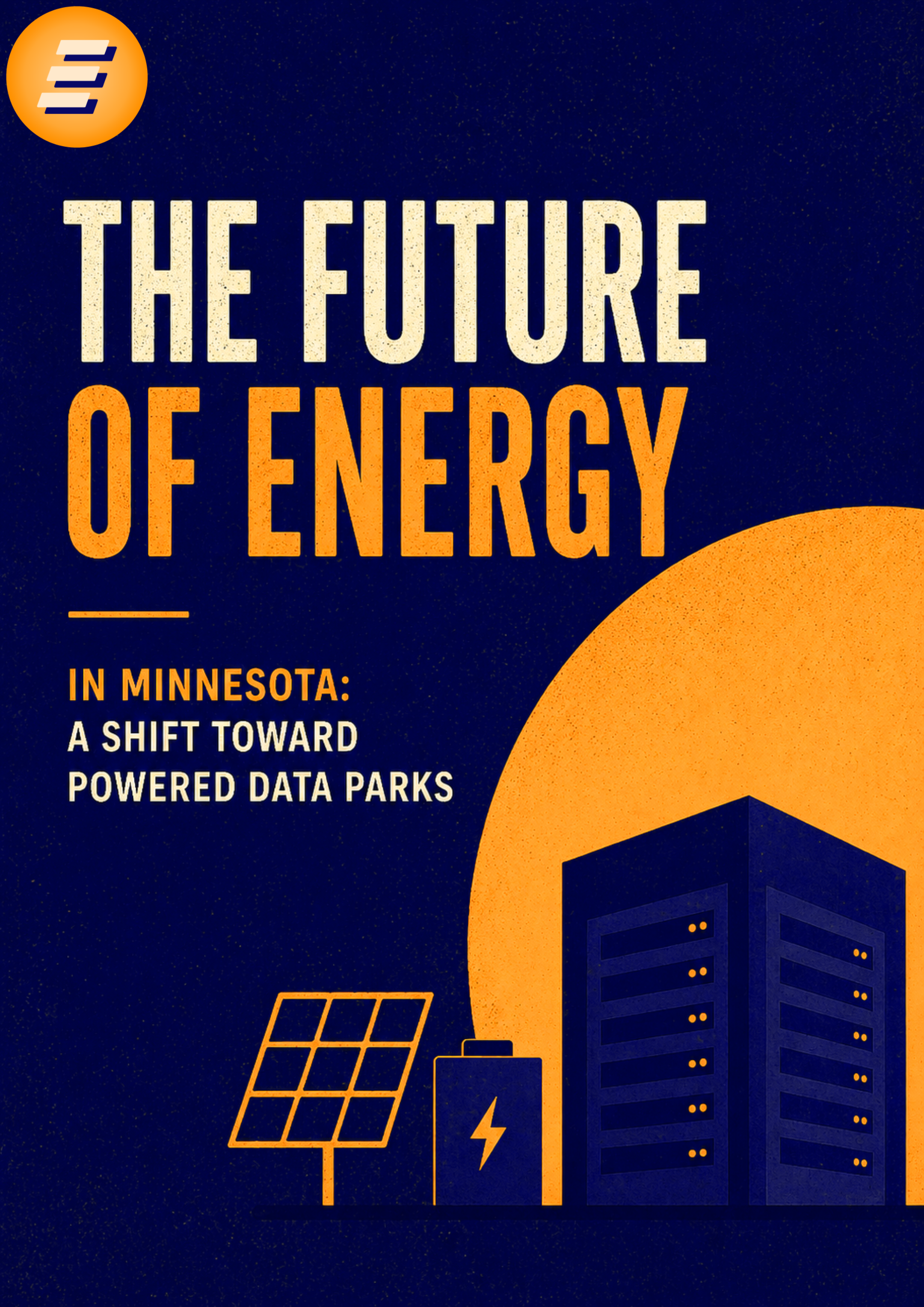
Clean energy development across Minnesota is entering a new phase. Traditionally, projects have followed a familiar model: build solar or wind, connect to the grid, and sell electricity through long-term contracts or wholesale markets.
That model is beginning to evolve as electricity demand accelerates, driven in large part by data centers and AI infrastructure.
A Developer’s Approach
Geronimo Power, a Minnesota-based developer, is among those exploring a new model that pairs renewable energy directly with large-scale energy users.
Their proposed projects combine wind, solar, and battery storage with co-located data centers, an approach often referred to as a “powered data park.” Instead of relying entirely on the grid, these developments aim to generate and consume power in the same location.
This strategy is designed to address several challenges at once, including long interconnection timelines, grid congestion, and curtailed renewable energy.
Why This Matters
Large data centers require hundreds of megawatts of reliable power, often on accelerated timelines. By pairing generation with demand, developers like Geronimo are attempting to bring new capacity online more efficiently while reducing strain on existing infrastructure.
Minnesota has become a key testing ground for this approach due to its strong renewable resources and available land in rural areas.
At the same time, projects of this scale introduce important conversations around land use, community impact, and long-term economic benefits. As a result, community engagement is becoming central to how these projects move forward.
Looking Ahead
Geronimo Power’s shift toward integrated energy and data infrastructure reflects a broader change in the industry, from generating electricity for the grid to developing energy systems around specific end users.
While large-scale models continue to evolve, community-based solutions like community solar will remain an important part of the energy landscape. Together, these approaches will help meet growing demand while shaping a more resilient and balanced system.
