
Gateway to Solar 2026
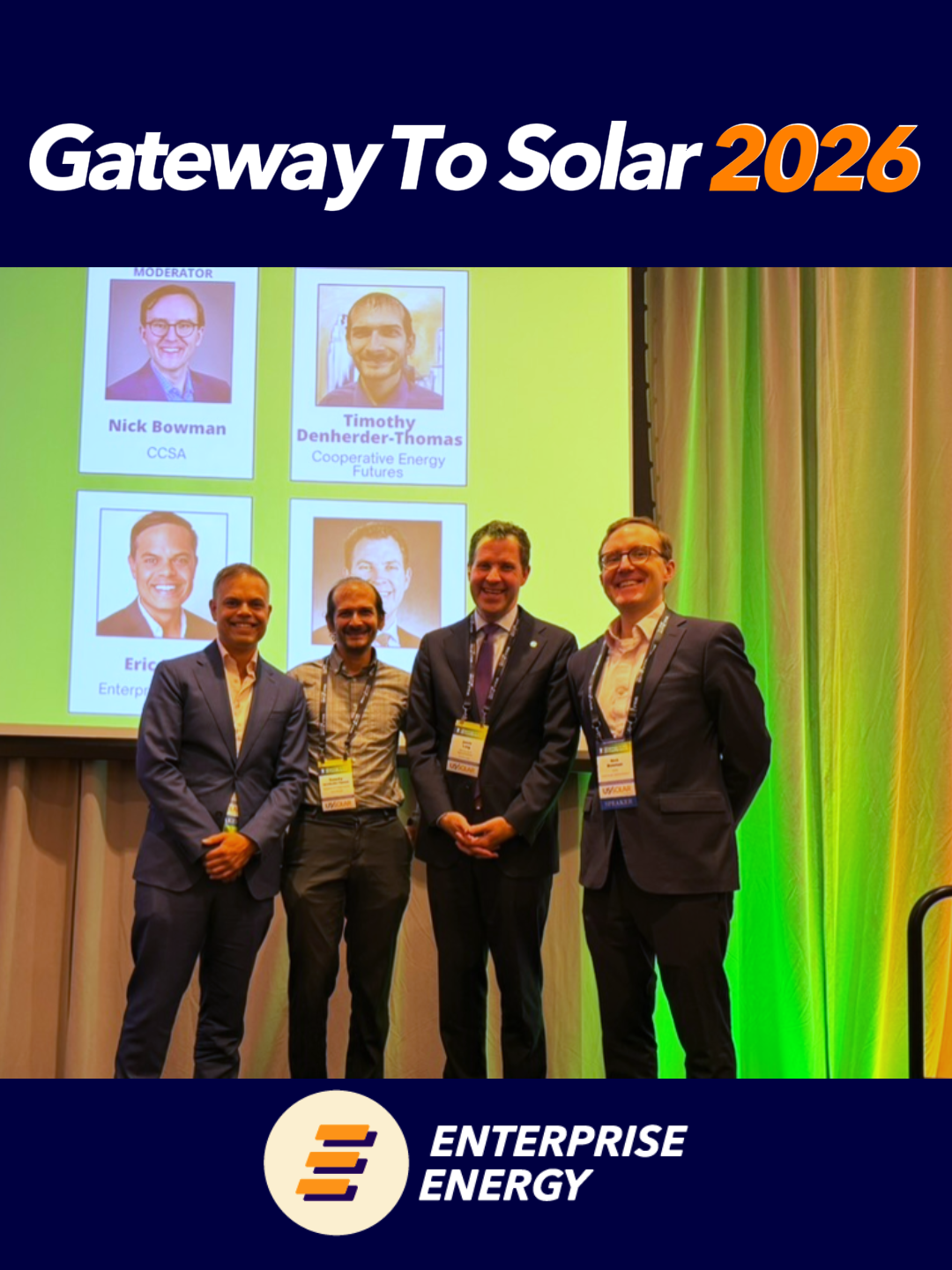
Enterprise Energy was proud to participate in the 2026 MnSEIA Gateway to Solar Conference.
This year’s conference arrived at a pivotal moment for Minnesota’s solar industry. As developers navigate shifting federal policy, regulatory uncertainty, interconnection delays, supply chain pressures, and changing market dynamics, Gateway brought together the people and organizations working to chart a path forward.
Perhaps the most encouraging takeaway was the depth of experience, determination, and ingenuity that continues to define Minnesota’s clean energy community. Despite the headwinds, the industry remains remarkably resilient, with no shortage of ideas or ambition for what comes next.
Enterprise Energy CEO Eric Pasi joined a lively panel examining barriers in Minnesota’s evolving community solar garden (CSG) market, offering candid perspectives on interconnection challenges and the relationship between developers and Xcel Energy. Moderated by Nick Bowman of SEIA’s new Distributed Generation team, alongside Minnesota State Representative Jamie Long and Cooperative Energy Futures CEO Timothy Denherder-Thomas, the panel explored what needs to change to restore momentum, improve accountability, and get more community solar projects built.
The growing influence of data centers on Minnesota’s energy landscape emerged as another major theme. With electricity demand poised to accelerate, utilities, policymakers, and developers face important questions about how to accommodate new loads without compromising affordability or the state’s clean energy goals. The rapid expansion of data centers also creates an opportunity to rethink how distributed generation, battery storage, and grid infrastructure can work together to meet demand. For Minnesota’s clean energy industry, the challenge is ensuring that this growth becomes a catalyst for investment and innovation rather than another source of grid congestion.
A luncheon focused on critical minerals and domestic supply chains offered a different perspective on Minnesota’s energy future. Featuring representatives from MiningMinnesota and leaders from both sides of the political aisle, the session examined the state’s potential role in supplying materials essential to American energy infrastructure. While questions surrounding responsible resource development remain complex, the broader takeaway was clear: achieving energy independence requires thinking beyond generation to the materials, manufacturing, and supply chains that make the energy transition possible.
Minnesota Public Utilities Commission Chair Katie Sieben and Commissioner Audrey Partridge provided valuable insight into the regulatory landscape guiding the state’s carbon-free energy ambitions. From interconnection reform to grid modernization and long-term resource planning, the decisions being made today will shape which projects move forward and how quickly. For developers facing years of uncertainty in the interconnection process, the importance of predictable timelines, regulatory transparency, and accountability cannot be overstated. Minnesota has established ambitious clean energy goals; delivering on them will require an equally ambitious approach to implementation.
Xcel Energy’s CapacityConnect initiative, being advanced in partnership with Sparkfund, was a hot topic at the conference. Approved by the PUC earlier this year, the program envisions deploying up to 200 MW of distributed battery storage across Minnesota by 2028. The initiative signals a meaningful shift in how utilities can leverage smaller, strategically located energy resources to support grid reliability and growing capacity needs. For Enterprise Energy, which is actively advancing distributed energy storage development, programs like CapacityConnect reinforce the enormous potential for batteries to become an integral part of Minnesota’s energy infrastructure.
For Enterprise Energy, the themes emerging from Gateway closely reflect the challenges and opportunities we encounter in our work every day. From advancing community solar and distributed storage to navigating interconnection bottlenecks and evolving market conditions, our focus remains on translating Minnesota’s clean energy ambitions into projects that deliver tangible benefits for communities across the state.
Gateway served as an important reminder that while the path forward may be complicated, Minnesota has the talent, resources, and determination to lead. The next chapter will depend on our collective ability to turn that potential into progress.
Thank you to MnSEIA, the speakers, sponsors, and everyone who helped make this year’s Gateway to Solar Conference a success.
