
Power on Their Own Terms: Takeaways from the 2026 Tribal Energy Forum
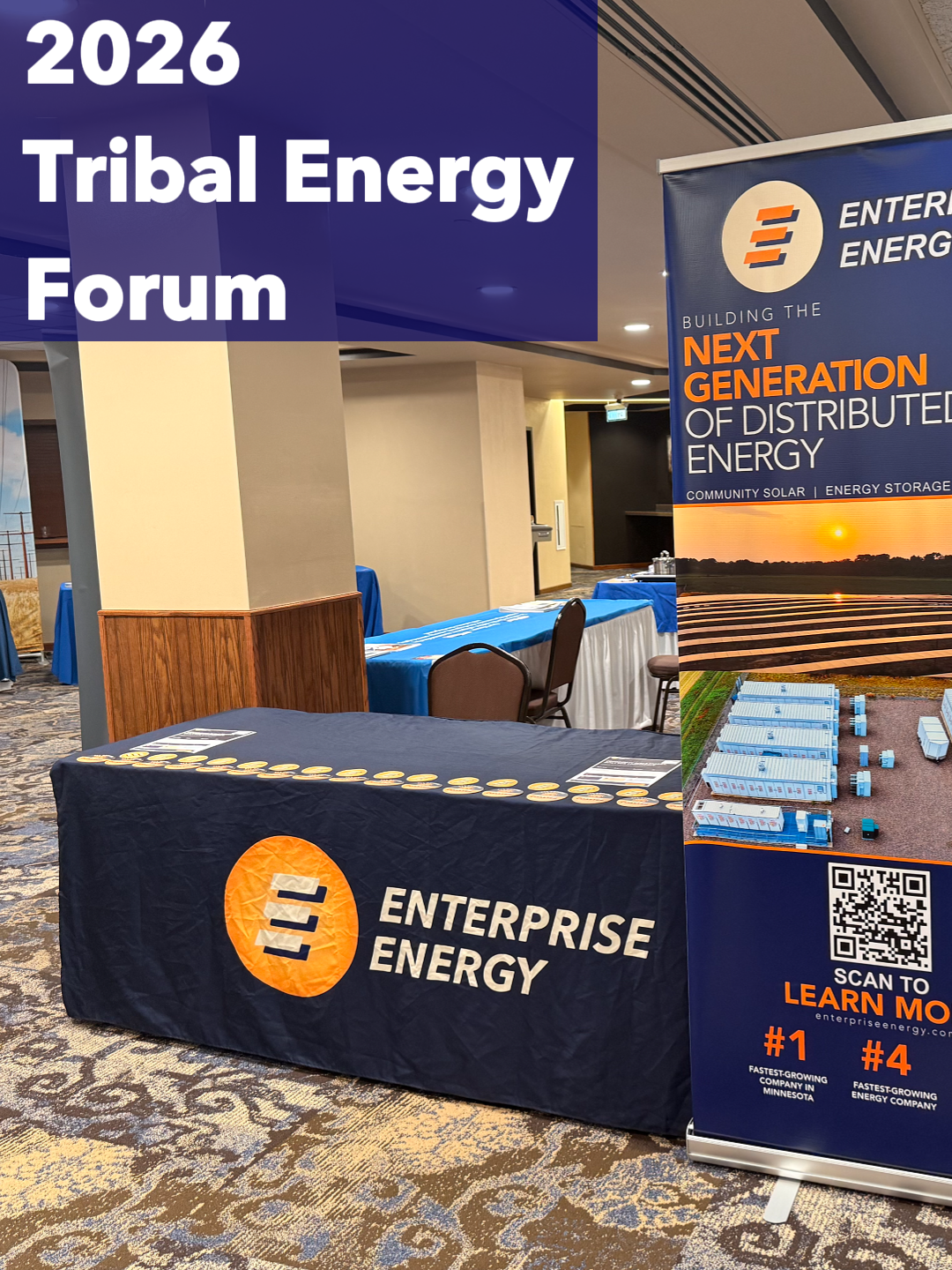
Enterprise Energy joined Tribal leaders, energy professionals, and community partners October 8–9 for the second annual Tribal Energy Forum at Jackpot Junction Casino Hotel in Morton, Minnesota. Hosted on the lands of the Lower Sioux Indian Community, the event brought together organizations working to advance energy development and economic opportunity across Tribal Nations.
Organized by the Tribal Advocacy Council on Energy (TACE), in partnership with Native Sun Community Power Development, the two-day gathering featured presentations, project showcases, and conversations about Tribal utilities, workforce development, housing, and emerging energy needs.
A Standout Story from Yakama Power
A highlight of Thursday evening’s dinner was the presentation and interview with Ray Wiseman, general manager of Yakama Power. The evening also featured Dr. Gabriel Chan of the University of Minnesota’s Humphrey School of Public Affairs, whose keynote addressed inter-Tribal utilities.
Wiseman shared the story of the Yakama Nation’s work to establish its own electric utility, a particularly memorable discussion for our team. After years of planning and negotiations, Yakama Power began serving customers in 2006, giving the Nation a more direct role in managing electricity service and supporting local economic development.
The utility’s growth has included a substantial commitment to training and employing Tribal members. In an earlier Department of Energy presentation, Wiseman described the process of building a workforce, developing line crews, and gradually taking on construction, maintenance, and outage response. That history added context to the forum’s broader focus on Tribal ownership and career opportunities in energy.
Data Centers and Tribal Nations
Friday morning the conversation turned to data centers, with a panel dedicated to infrastructure, siting, and long-term impacts for Tribal Nations.
Moderated by Lissa Pawlisch of the Minnesota Department of Commerce, the panel included Bridget Williams of the Great Plains Institute, Dr. Jean Hardy of Michigan State University, Chantel Greene of Xexus Greene Energy, and Catherine Neuschler of the Minnesota Environmental Quality Board.
The session brought together energy, technology, policy, and Tribal development perspectives on an increasingly prominent topic. For our team, it was another standout part of the forum as communities consider what data center development could mean for their lands and infrastructure.
These projects can involve opportunities for land leases, electricity sales, and infrastructure investment, alongside significant planning around power supply, cooling, and water use. The Department of Energy’s guidance for Tribal Nations emphasizes evaluating each proposal according to its specific requirements and the community’s goals.
Projects, Workforce, and Collaboration
Throughout the forum, breakout sessions highlighted a wide range of community projects and energy initiatives. The program included the Lower Sioux Indian Community’s hempcrete and housing work, solar tiny homes, the Minnesota Indigenous Energy Workforce Initiative, solar thermal systems, and heat pump projects.
Additional sessions featured the Oceti Sakowin Power Authority, a presentation on TACE’s strategic plan, and a discussion of carbon markets in Minnesota with State Representative Larry Kraft. Friday opened with a PowerOn Midwest presentation on transmission development and Tribal collaboration involving Xcel Energy, Great River Energy, and ITC Midwest.
Between sessions, networking and exhibitor time gave participants space to connect and learn more about the organizations supporting this work. Enterprise Energy was glad to participate as an exhibitor and hear directly from the leaders and practitioners advancing energy projects in their communities.
A big thank you to TACE, Native Sun Community Power Development, the Lower Sioux Indian Community, and the speakers and organizers who made this year’s forum possible. We appreciated the opportunity to take part and look forward to continuing the conversation!
